Projects: KSHAP
Korean Social Life, Health and Aging Project(KSHAP)
The Korean Social Life, Health, and Aging Project (KSHAP) is a population-based longitudinal study designed to investigate health determinants among elderly Koreans living in a rural community. Benchmarked against the US National Social Life, Health, and Aging Project (NSHAP), KSHAP aims to understand the interplay between social networks and various health dimensions, including physical, emotional, and cognitive health. The study specifically targets individuals aged 60 and older and their spouses in a township on Gangwha Island, pursuing a complete enumeration of this population rather than a sample.
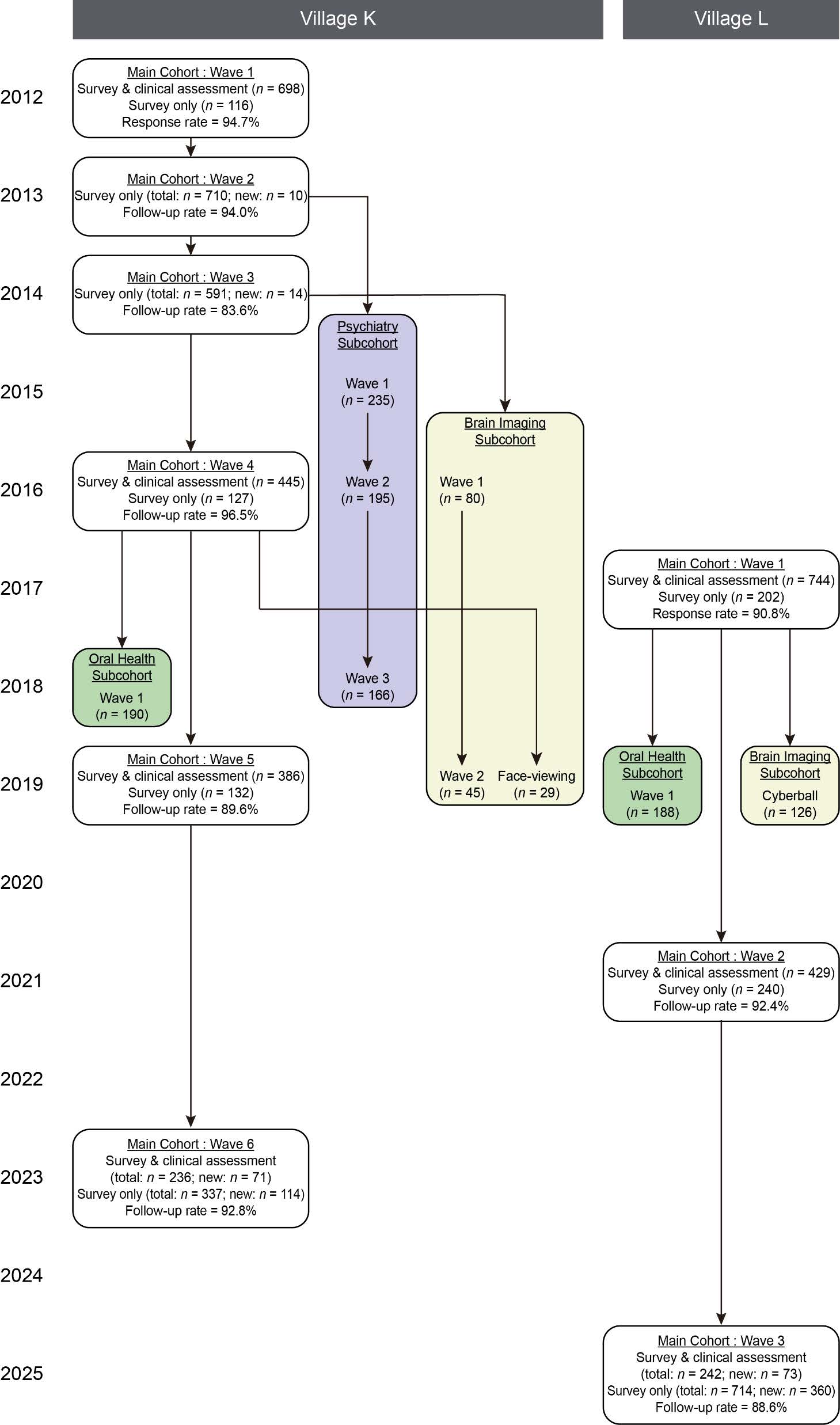
Data collection for the first wave was conducted between December 2011 and July 2012, achieving a high response rate of 94.7% for face-to-face interviews. The KSHAP-Health Examination (KSHAP-HE) cohort comprises 698 participants who underwent comprehensive health assessments either at a public health center or at their homes. The study utilized a multi-disciplinary approach, gathering data through extensive questionnaires on demographics, social networks, and medical history, alongside physical examinations that included anthropometric measurements, blood pressure checks, and blood analysis.
A key feature of the KSHAP is its focus on social network analysis to explore how social relationships influence health outcomes in an elderly population. The study plans to conduct follow-up examinations to observe longitudinal changes in health and social characteristics. To foster research collaboration, the baseline dataset has been made available to the public through the Korean Social Science Data Archive, allowing researchers to further analyze the determinants of cardiovascular and metabolic health among older adults in Korea.
[Key Data Components]
- 1) Social Network Data
- - Real-name name-generator to capture actual discussion, medical advice, and emotional-support ties.
- - A complete community roster enabling the reconstruction of a near-complete sociocentric network, allowing global network analysis of social structure.
- - Longitudinal network data supporting the examination of reciprocity, network dynamics, and structural change.
- 2) Health-Related Measures
- - Repeated measures of core health-related domains—including depressive symptoms (CES-D), cognitive function (MMSE-DS), and overall health status (SF-12)—assessed longitudinally across the study period.
- - Additional assessments of cigarette smoking, alcohol consumption and self-reported medical history of major chronic conditions.
- 3) Health Examination Data
- - Objective measures of body composition (BIA), blood pressure and vascular function, bone densitometry, and physical function (TUG test)
- - Fasting blood biomarkers including hematological, metabolic, lipid, hepatic, renal, and inflammatory markers (e.g., glucose, insulin, cholesterol profiles, liver enzymes, creatinine, and C-reactive protein).
- 4) Brain Imaging
- - Multimodal neuroimaging including structural MRI (T1-weighted imaging, DTI) and functional MRI (resting-state and task-based).
- - Task-based fMRI paradigms included face-viewing and Cyberball tasks, probing social perception and social exclusion processes.
- - Brain MRI data were collected across multiple waves, enabling longitudinal assessment of brain structure and function.